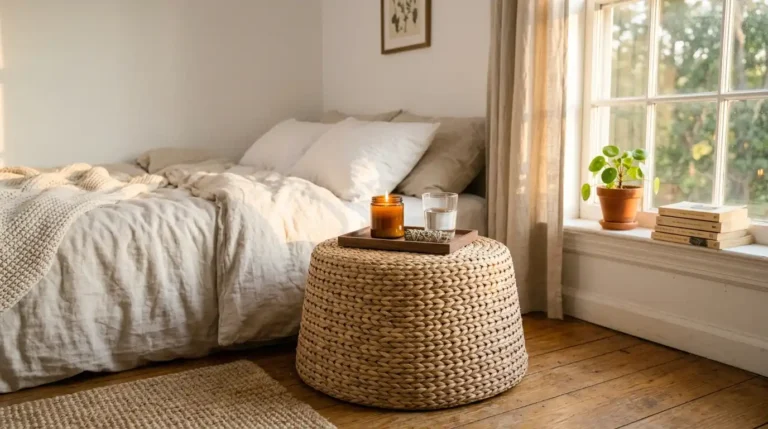

Winter Bedroom Styling: 12 Ways to Make It Feel Warmer
A cold bedroom does more than make you dread getting out of bed. It messes with your sleep, makes the whole room feel uninviting, and turns your morning routine into a sprint to the thermostat. Winter bedroom styling is not about a complete redesign. It is about the small, targeted swaps that trap heat, add softness, and make the space feel genuinely warm when the temperature drops.
Most people throw an extra blanket on the bed and call it done. But the difference between a bedroom that feels cold and one that feels like a retreat comes down to layers, light, texture, and a few choices you might not have thought about.
These 12 ideas cover bedding, lighting, flooring, walls, and the little finishing touches that make the biggest impact. Every one is doable in a weekend, and most cost less than a space heater.
1. Flannel Sheets Under a Weighted Duvet

Saturday morning, still half asleep, and you pull the covers closer. If those sheets are cotton percale, they feel cool against your skin, which is great in July but miserable in January. Flannel changes that first-contact moment completely.
Flannel sheets are brushed on both sides, so they hold your body heat instead of wicking it away. Pair them with a weighted duvet (look for one with a cotton or minky cover, not the slippery polyester ones) and the bed becomes the warmest spot in the house. If you want to take the full cozy bedroom ideas approach, this is the foundation.
Wash flannel in cold water to prevent pilling. It lasts longer that way.
2. A Chunky Knit Throw Draped Across the Foot

Fold it in thirds lengthwise and drape it across the bottom third of the bed. Not bunched up, not tossed on like an afterthought. A chunky knit throw adds a visible layer of warmth that makes the whole bed look more substantial.
The best throws for winter are cotton-wool blends or thick chenille. Skip the acrylic ones that look nice in photos but slide off the bed every night. Keep it in a warm tone like cream, oatmeal, or rust to reinforce the winter palette.
If you want a polished, hotel-style layered bed , the throw is the finishing piece that pulls everything together.
Winter Throw Blanket Checklist
3. Velvet Curtains Instead of Sheers

Sheer curtains let in light, but they also let in cold. Single-pane windows lose a lot of heat through the glass, and a thin curtain does nothing to slow that down. Heavy velvet panels act as a second layer of insulation against window drafts.
Hang them as close to the ceiling as possible and let them pool slightly on the floor. This traps a pocket of still air between the curtain and the glass, which keeps the room warmer without touching the thermostat. Darker colors like navy, forest green, or charcoal absorb and hold warmth better than lighter shades.
If you also want to block morning light, look at panels that are both blackout and insulating. You solve two problems with one swap.
4. Warm Bedside Lamps Instead of Overhead Lighting

The soft amber circle from a bedside lamp does more for warmth than any overhead fixture. That single ceiling light hits every surface evenly and makes the room feel flat and clinical, especially at night. Two bedside lamps with warm-toned bulbs (2700K or lower) pool light exactly where you need it and leave the rest of the room in soft shadow.
Look for lamps with fabric shades. Linen and cotton diffuse the light and push it outward in a warm glow. Glass or metal shades throw sharper, cooler light that works against the cozy feel.
Use 2700K warm-white bulbs in bedside lamps.
Choose fabric shades (linen or cotton) for softer diffusion.
Overhead fixtures as your only light source after dark.
Daylight-temperature bulbs (5000K+) in a bedroom setting.
5. A Wool or Shag Rug Right Beside the Bed

One rule for winter bedrooms: your bare feet should never hit cold hardwood first thing in the morning. A thick wool or shag rug placed along the side of the bed where you get out solves this instantly. It traps air in its fibers, which is what makes it feel warm underfoot.
Size matters here. A runner that is too narrow makes you aim for it with your feet, which is annoying half asleep. Go wide enough that you can step out of bed naturally and still land on the rug. If you are not sure what size works for your room, this guide on choosing the right bedroom rug size has diagrams that make it simple.
💡 Quick Tip
Use a rug pad underneath to keep the rug from sliding on hardwood and to add an extra layer of cushion and insulation between your feet and the cold floor.
6. Extra Euro Pillows Stacked Behind Your Sleep Pillows

I tried this last winter after seeing it in every boutique hotel room I have stayed in, and it surprised me how much it changed the look. Two or three 26-inch Euro pillows propped against the headboard give the bed a layered, full appearance that reads as warm and inviting.
Use covers in a heavier fabric like velvet, corduroy, or boucle for winter. Match them loosely to the rest of your bedding, not exactly. A slight contrast in texture makes the layers feel intentional rather than matchy. Stand them upright, slightly overlapping, and let them lean.
7. A Tufted Headboard in a Dark Warm Neutral

An upholstered headboard holds warmth in a way that a bare wall or metal frame never will. The fabric absorbs sound, too, which makes the room feel quieter and more enclosed. Tufted styles in dark neutrals like charcoal, deep taupe, or espresso give the bed a grounded anchor that feels right for cold weather.
You do not need to spend a fortune on this. There are solid upholstered headboards under $300 that look far more expensive than they are. Velvet holds up well and catches light in a way that linen does not, which adds depth to the room even on a gray winter day.
8. Cedar or Vanilla Candle on the Nightstand

People underestimate how much scent shapes the way a room feels. A cold room with no scent feels empty. The same room with a single candle burning cedar, vanilla, or sandalwood feels warmer even before the flame heats anything.
Keep one candle on your nightstand, not a collection scattered around the room. One focused scent point is enough. Soy candles with cotton wicks burn cleaner and last longer than paraffin. Light it 30 minutes before you get into bed, and the scent will settle into the sheets and pillows.
Blow it out before you fall asleep. That part is non-negotiable.
9. Swap Bright White Bedding for Warm Ivory or Oatmeal

Here is a mistake a lot of people make in winter: they keep their crisp white summer bedding and wonder why the room still feels cold. White reflects light and reads as clean and cool. That is exactly what you do not want when it is freezing outside.
Shifting to warm ivory, oatmeal, or soft cream makes the bed feel warmer to the eye before you even touch it. The difference is subtle but real. If you are building a full neutral bedroom color palette , these warm off-whites pair well with wood tones, terracotta accents, and deep greens.
Bright white sheets, duvet, and pillowcases. The bed looks clean but cold, especially against gray winter light from the window.
Warm ivory duvet with oatmeal sheets and a cream knit throw. Same neutral family, but everything feels softer and warmer against the skin and the eye.
10. A Heated Mattress Pad Under Your Fitted Sheet

Side by side, a heated mattress pad and a space heater do similar jobs. But the mattress pad warms exactly where you are lying, uses a fraction of the electricity, and does not dry out the air in the room. For anyone who sleeps cold, this one change is worth more than everything else on this list combined.
Look for one with dual controls if you share the bed. Most have a 10-hour auto shutoff and multiple heat levels. Turn it on 15 minutes before you climb in so the sheets are warm when you get there.
I have used one for three winters and the difference in how fast I fall asleep is noticeable.
11. Closed-Toe Slippers and a Basket by the Bedroom Door

You wake up, swing your legs out, and your feet hit the rug. Good. But then you walk to the bathroom, the hallway, the kitchen, and the cold floor follows you through every room. A pair of closed-toe slippers with a real sole keeps the warmth going.
The styling detail that ties this into your bedroom: keep the slippers in a woven basket right by the bedroom door. It looks intentional, keeps the floor clear, and means you never have to search for them in the dark. Sheepskin-lined or wool-felted slippers hold heat best.
12. A Deep Paint Color on One Accent Wall

A warm, deep color on the wall behind your bed changes the temperature of the room visually. Dark olive, warm terracotta, deep plum, or chocolate brown make the wall recede slightly and wrap the bed area in a cocoon-like feel. This is especially useful in bedrooms with high ceilings that can feel drafty and open.
You only need one wall. Painting all four dark can make a small room feel like a cave. One accent wall behind the headboard grounds the bed, adds depth, and gives every piece of bedding and decor in front of it more contrast.
If you rent and cannot paint, removable peel-and-stick wallpaper in a deep tone or textured pattern does the same job without the commitment.
You only need one accent wall to change the whole feel of the room. Paint the wall behind the headboard and leave the rest neutral.
Final Thoughts
Winter bedroom styling comes down to layers, warmth, and intention. You do not need to gut the room or spend a full weekend redecorating. One flannel sheet swap, one rug by the bed, one warm lamp on the nightstand, and the room already feels different. Stack a few of these ideas together and you have a bedroom that actually makes you want to stay in it when the cold sets in.
Most of these changes take less than an hour and last the entire season. Start with the one that annoys you most, whether that is cold feet on hardwood or harsh overhead light, and work from there.
Save this list for the next time you are ready to make your bedroom a warmer place to land at the end of a long winter day.