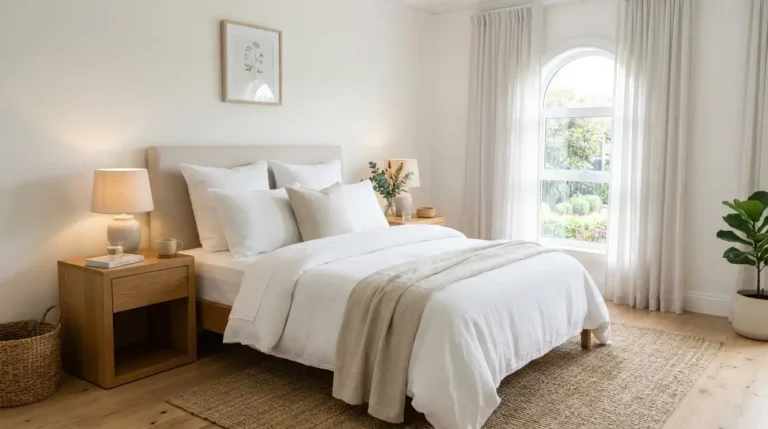

Bedroom Design Trends for 2026: What’s In and What’s Out
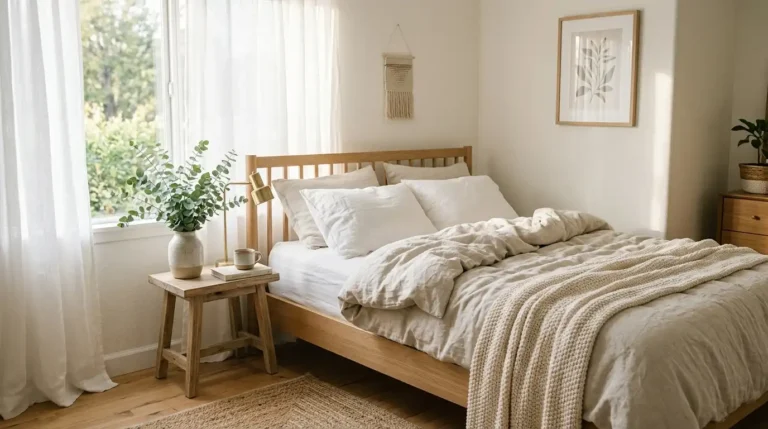
Bedroom design trends for 2026 have shifted hard away from the minimalist gray-and-white rooms that dominated the last decade. The new direction is warmer, softer, and a lot more personal. If your bedroom still looks like a 2019 Airbnb listing, this is the year to rethink it.
What’s driving the change? People want their bedrooms to actually feel restful. Not staged. Not polished for a photo. Rooms that hold real comfort, interesting texture, and colors that don’t wash out under overhead lighting.
This list breaks down 12 specific trends gaining ground right now, along with the outdated moves they’re replacing. Some are big swaps. Others are small shifts you can make in a weekend. All of them are grounded in what’s actually working in real bedrooms, not just on mood boards.
Warm Earthy Tones Over Cool Grays

Gray bedrooms had a long run. Too long. The shade that once looked sophisticated started looking cold and flat, especially in rooms with limited natural light. In 2026, the color story is shifting to warm earth tones: clay, ochre, terracotta, warm sand, and soft mushroom browns.
These colors do something gray never did well. They make a room feel lived in without feeling dark. A sandy beige wall with white linen bedding reads calm and grounded, not boring. Try pairing a warm clay accent wall with soft ivory on the remaining three walls for a room that feels pulled together without trying too hard.
If you’re unsure where to start with warmer tones, a breakdown of neutral bedroom color palettes can help narrow down the right shade for your light conditions.
Clay, ochre, warm sand, mushroom brown.
Terracotta accents with soft ivory walls.
Cool grays, blue-grays, stark white walls.
Greige that looks different in every light.
Curved Furniture Edges

Sharp, boxy furniture had its moment. Now bedrooms are filling up with soft curves: rounded nightstands, arched mirrors, dressers with gentle contours. The shift makes sense. A bedroom is the one room where you want everything to feel soft, even the furniture.
A curved nightstand next to a straight-edged bed creates visual contrast that keeps the room interesting. If you’re working with a tight floor plan, rounded edges also help with traffic flow. No more catching your hip on the corner of a square dresser at 2 a.m.
I’ve tested this in a small apartment and the difference was noticeable right away. The room felt more open, even though the furniture was the same size.
Textured Walls Over Flat Paint

Flat painted walls are losing ground to texture. Limewash, Roman clay, slat panels, even grasscloth wallpaper. Bedrooms in 2026 are moving toward surfaces you can actually see catching light differently throughout the day.
Limewash paint is the easiest entry point. One coat over a white base gives walls a natural, chalky depth that flat latex never achieves. The finish isn’t uniform, and that’s the whole point. Your walls stop looking like a stage set and start looking like a real room.
A few things to know before you start:
Prime your wall first. Limewash grabs onto porous surfaces, so a coat of primer gives it something to hold.
Apply with a large brush in random, sweeping strokes. Do not roll it. The brush marks create the texture.
Let it dry fully before judging. Limewash lightens significantly as it cures, so the wet color will look different from the final result.
Low-Profile Platform Beds

Tall, bulky bed frames with ornate footboards are fading out. The look right now is low and clean. Platform beds that sit closer to the ground give a bedroom a relaxed, modern weight without eating up visual space.
This is especially useful if your ceilings are on the shorter side. A lower bed makes the gap between mattress and ceiling feel bigger, which tricks the eye into reading the room as taller than it is. If you’re working with a small bedroom, that visual breathing room matters.
Skip the box spring with these. A good platform bed supports the mattress directly, and the cleaner profile is part of the appeal.
Deep Green Accent Walls

The accent wall isn’t dead. It just moved on from navy blue. In 2026, the standout color for bedroom accent walls is deep, moody green. Think forest, hunter, or dark olive. These shades work behind the headboard and pair well with warm wood tones and brass hardware.
The trick is keeping the rest of the room light. A deep green wall behind the bed, ivory or warm white on the other three walls, linen bedding, a natural wood nightstand. The contrast does the heavy lifting. You don’t need much else to make the room feel finished.
💡 Quick Tip
Test deep paint colors with large swatches (at least 12×12 inches) taped to the wall for 48 hours. Dark greens look dramatically different in morning light vs. evening lamplight, and a small swatch won’t show you that shift.
Linen Bedding Replacing Sateen

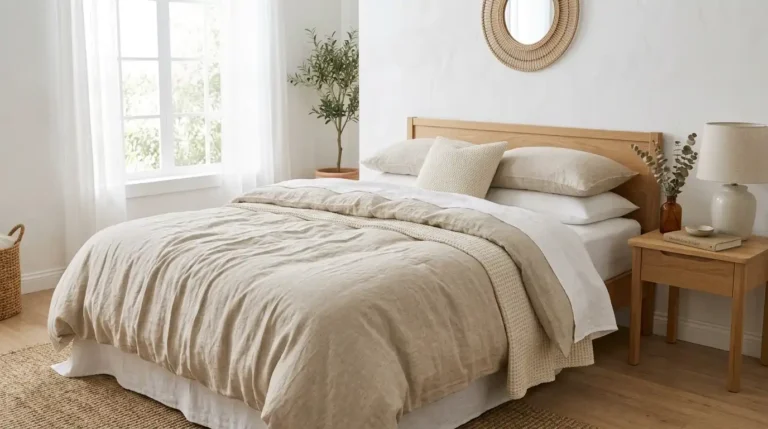
Shiny, smooth sateen sheets are giving way to relaxed linen. The wrinkled, lived-in look of linen fits the broader trend toward bedrooms that feel comfortable rather than staged. And linen genuinely sleeps cooler, which is the kind of practical benefit that keeps a trend around.
The key to making linen bedding look intentional and not just messy is layering. A linen duvet cover, a contrasting throw blanket folded at the foot, and two or three pillows in different sizes. If you want the full breakdown, this guide to layering a bed like a 5-star hotel walks through exactly how to stack it.
Stick with muted, natural tones: oatmeal, soft sage, warm white, or dusty rose. Bright white linen wrinkles in a way that reads as sloppy. Off-whites and warm neutrals wrinkle in a way that reads as relaxed.
Vintage and Secondhand Nightstands

Matching nightstand sets from the same furniture store are losing their appeal. The trend is toward mismatched, found pieces. A small vintage dresser on one side, a reclaimed wood stool on the other. A mid-century side table from a thrift store beside a modern lamp.
Most people skip this because it feels risky. But the mismatch is what makes a bedroom look collected over time, not bought all at once on a Saturday afternoon. The only rule: keep the heights roughly similar so the bedside setup doesn’t look lopsided.
Two identical box-store nightstands with chrome pulls. They match the bed frame and dresser. The room looks like a catalog page from 2017.
One thrifted walnut side table, one painted vintage stool. Different shapes, similar heights. The room looks like it was styled over years, not ordered in one cart.
Warm-Toned Lighting Over Cool LEDs

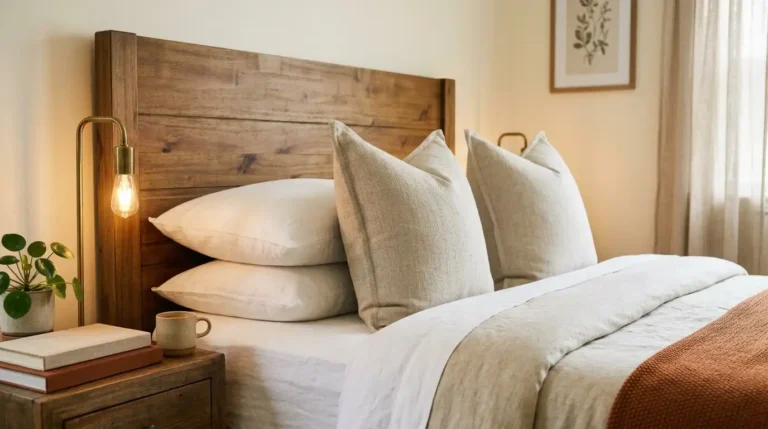
Cool white LED strips under the bed and behind the TV looked futuristic for about five minutes. Now they just look harsh. Bedrooms in 2026 are going warm: amber-toned bulbs, linen-shaded table lamps, and fixtures with a visible warm glow. The target is somewhere around 2700K color temperature, which mimics candlelight without actually being dim.
One swap that makes a real difference: replace the overhead flush mount with a pendant or semi-flush fixture that has a fabric shade. It softens the light and gives the ceiling some visual interest. Add a small table lamp on each nightstand and you rarely need the overhead at all.
Oversized Upholstered Headboards

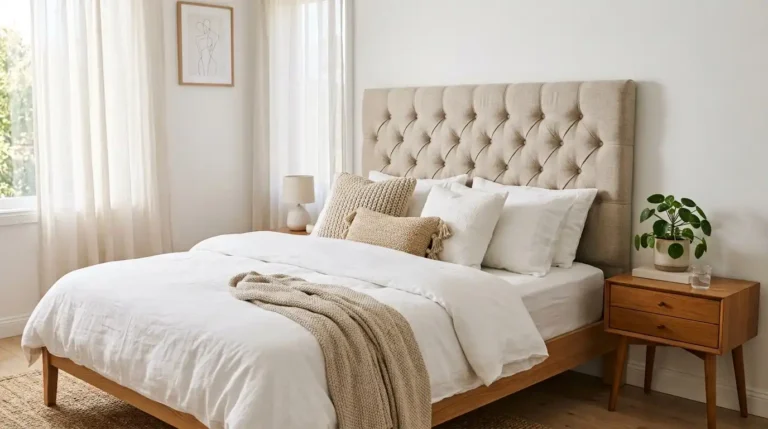
Standard-height headboards are shrinking into the background, literally. The 2026 move is an oversized upholstered headboard that reaches well above the pillows, sometimes nearly to the ceiling. It anchors the bed as the undeniable center of the room and adds softness to the wall behind it.
Fabric choices matter here. Bouclé and performance velvet are leading right now. Both hold up to leaning against while reading and both photograph well, which matters if you’re the kind of person who makes the bed specifically to take a photo. If you’re shopping on a budget, there are solid options for upholstered headboards under $300 that still give you that high-end, oversized look.
Built-In Bedside Shelving

Floating shelves beside or above the bed are replacing traditional nightstands in tighter bedrooms. One narrow shelf at mattress height gives you a spot for your phone, a glass of water, and a small lamp. It takes up zero floor space and keeps the area around the bed feeling open.
This works especially well if your bedroom has an awkward footprint. Instead of cramming a nightstand into a gap that’s too narrow for it, a single floating shelf fits flush to the wall and does the same job. For rooms with tricky angles, pairing this with a smart approach to arranging furniture in an awkward layout can make the whole room work better.
Statement Rugs Under the Bed

The bare floor look is done. In 2026, layered and statement rugs under the bed are a defining move. Not a small accent rug at the foot of the bed that slides around every time you step on it. A full-sized rug that extends at least two feet past each side of the bed, giving you something soft to land on when you get up.
Bedroom Rug Sizing Checklist
In my experience, a rug that’s too small looks worse than no rug at all. It floats in front of the bed and makes the room feel chopped up. If you’re not sure what size to get, a guide on choosing the right rug size for your bedroom with visual diagrams takes the guesswork out of it.
Layered Blackout Window Treatments

Single-panel curtains hanging loosely from a tension rod? That’s the move that’s fading. The 2026 approach to bedroom windows is layered: a blackout roller shade close to the glass for sleep quality, plus a set of linen or cotton curtains on a proper rod for texture and softness during the day.
This two-layer setup does what neither piece can do alone. The blackout shade blocks light completely for sleep. The curtains add warmth and frame the window so the room doesn’t look like an office with the blinds down. If sleep quality is a priority, these are the best blackout curtains for better sleep to start with.
Hang the blackout shade inside the window frame and mount the curtain rod 4 to 6 inches above the frame. This closes the light gap at the top and makes your windows look taller.
Wrapping It Up
The bedroom design trends shaping 2026 all point in the same direction: rooms that prioritize how they feel over how they photograph. Warmer colors, softer textures, relaxed bedding, and lighting that doesn’t make you squint. None of these changes require gutting the room. Most of them are one or two smart swaps away.
Start with the change that bugs you most. Maybe it’s the gray walls that look cold every morning, or the overhead light that makes the room feel like a waiting room. Fix that one thing first, then build from there.
Save this list for the next time you’re ready to refresh your bedroom. One change at a time adds up faster than you think.