
16 Bedroom Decorating Mistakes First-Time Renters Always Make
Most first-time renters make the same bedroom decorating mistakes within the first week of moving in. The bed ends up shoved against a wall, the lighting feels like an interrogation room, and everything somehow looks temporary even after months of living there.
The frustrating part is that none of these are expensive problems. They are habit problems. People copy the dorm room setup they already know, buy the first furniture set they see, and skip the cheap details that actually make a room feel finished.
This list covers 16 of the most common slip-ups renters make when setting up a bedroom, plus the straightforward fix for each one. No renovations, no landlord permission needed, no big budget required.
1. Pushing the Bed Flat Against the Wall

Almost every renter slides the bed frame flush against the wall on their first day. It seems like the obvious move, especially in a small room. But it boxes you in on one side, makes the bed harder to make, and looks like a leftover college habit.
Pull the bed away from the wall by even four to six inches. Center it on the longest wall if your layout allows it. You get breathing room on both sides, and the whole room starts to feel more intentional.
If space is tight, check out these small bedroom ideas for layouts that actually work with limited square footage.
2. Buying a Rug That’s Too Small

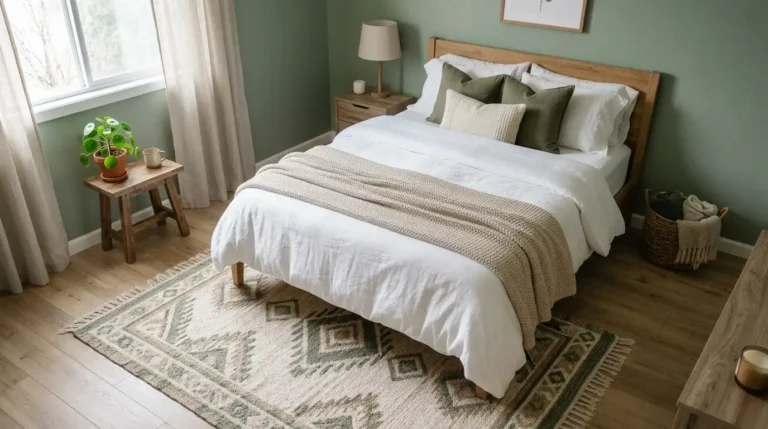
A rug that barely peeks out from under the bed does nothing for the room. It looks like a bath mat that wandered in from the hallway. The right rug anchors the space, softens cold floors, and makes the whole room feel connected instead of scattered.
For a queen bed, go with at least a 6×9 rug. For a king, aim for 8×10. The rug should extend at least 18 inches past the sides and foot of the bed so your feet land on something soft every morning.
Choose a 6×9 or larger rug for a queen bed.
Extend the rug 18+ inches past sides and foot of bed.
Buying a 4×6 rug that disappears under the frame.
Leaving the rug off-center so only one side of the bed has it.
3. Relying on One Overhead Light

That single ceiling fixture most rentals come with throws flat, harsh light across the entire room. It kills any sense of warmth before you even start decorating. The room feels like a waiting room, no matter how nice your bedding is.
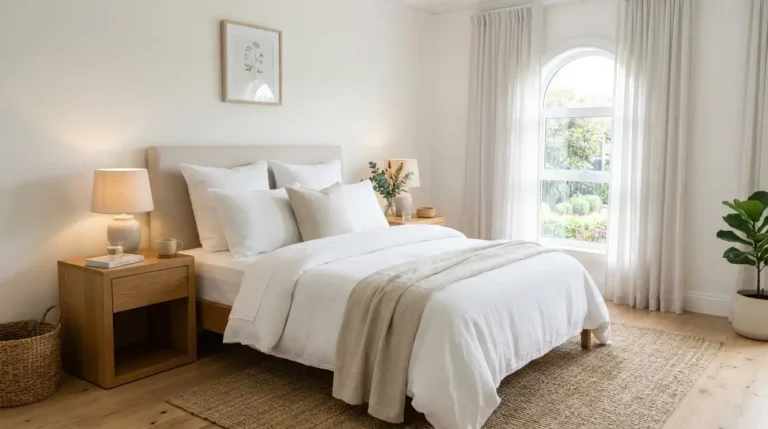
Layer in at least two other light sources. A bedside lamp and a floor lamp in the opposite corner create depth and pockets of warmth that one overhead bulb never will. Plug-in wall sconces are another solid option if you want to skip the floor lamp. I’ve tried this in rentals where you can’t touch the ceiling fixture, and just adding two warm lamps completely changed the mood at night.
4. Skipping Curtains for Bare Blinds

Bare vinyl blinds are functional, sure. They block some light. But they also scream “I just moved in and haven’t finished yet.” Curtains are the single fastest way to make a rental bedroom look like someone actually lives there on purpose.
Hang curtain rods with Command hooks or tension rods if your lease won’t allow drilling. Mount them a few inches above the window frame and extend them four to six inches past each side. This makes the window look taller and wider. Stick with solid colors or a simple texture to keep things clean.
5. Matching Every Furniture Piece Exactly

People assume a bedroom needs a matching set: same wood, same finish, same hardware on every single piece. That actually makes a room look like a catalog page or a hotel. Real, lived-in bedrooms have some contrast. The nightstand doesn’t have to match the dresser.
Mix two wood tones or combine a wood nightstand with a metal one. Pair a dark bed frame with lighter side tables. As long as two or three pieces share one common element, like similar hardware or a complementary color family, the whole room will still feel tied together.
💡 Quick Tip
Pick one unifying element across your mismatched pieces: a shared metal finish (all black hardware), a similar wood undertone (all warm-toned), or a repeated shape (round knobs throughout). That single thread holds the room together without making it look like a boxed set.
6. Hanging Art Too High on the Wall

Here is a simple rule that fixes most bare-wall problems: the center of your art should sit at about 57 inches from the floor. That is average eye level, and it is the standard galleries use. Most renters hang pieces way above that, which leaves the art floating near the ceiling and the wall looking weirdly empty below it.
Use painter’s tape to mark the spot before hammering anything. For a grouping of smaller frames, lay them out on the floor first and plan the spacing before you start putting holes in the wall.
7. Ignoring the Back of the Door

Every renter has at least one door that just sits there, closed most of the time, doing nothing useful. The back of a bedroom door is prime real estate for over-the-door hooks, a full-length mirror, or a hanging shoe organizer.
An over-the-door hook rack holds bags, robes, tomorrow’s outfit, or a few scarves without drilling a single hole. A full-length mirror on the back of the door frees up floor space and bounces light around the room. Most people skip this entirely and then complain about having no storage. In my experience, this one change clears clutter off chairs faster than any organizer bin.
8. Choosing a Bed Frame Without Storage

Rental closets are almost always too small. If your bed frame sits on solid legs with nothing underneath, you are wasting the biggest storage zone in the room. A platform bed with built-in drawers or a frame tall enough for under-bed bins solves half of the storage problems renters complain about.
If you already have a frame you like, get a set of flat under-bed containers with lids. Use them for off-season clothes, extra bedding, or shoes. Just make sure they actually fit under the frame before you order.
9. Using Cool White LED Bulbs

You unbox a new lamp, screw in the bulb it came with, and the room looks like a dentist’s office. Most cheap LED bulbs ship at 4000K to 5000K, which is a blue-toned daylight color. It makes skin look tired and walls look cold, no matter what shade you painted them.
Swap every bulb in the bedroom for a warm white LED rated between 2700K and 3000K. It costs a few dollars per bulb. The difference at night is immediate. Warm light makes bedding look richer, wood tones look deeper, and the whole room feels like a place you actually want to sit in after dark.
10. Shoving Furniture into Every Corner

When a bedroom feels small, the instinct is to line every wall with something. A dresser here, a bookshelf there, a desk in the last corner. What actually happens is the room feels more cramped, not less. There is no breathing room, no open floor space for your eyes to rest on.
Leave at least one corner empty. Even a bare corner with just a plant on the floor makes the room feel bigger than it is. If you need more ideas on making a tight space work, this guide to cozy bedroom ideas covers layouts that feel open and warm at the same time.
Every wall lined with furniture. No floor space visible. Room feels tight and cluttered even when it is clean.
One or two corners left open. A plant or empty space gives the eye a place to rest. Room feels twice as big.
11. Forgetting a Nightstand on Both Sides

One nightstand and one bare wall next to the bed is one of those things you stop noticing because you see it every day. But it throws the whole room off balance. The bed looks pushed to one side even when it is centered.
You do not need two matching nightstands. A small stool, a wall-mounted shelf, or even a sturdy stack of books on one side works. The point is to have a surface on each side of the bed for a lamp, a phone, or a glass of water. It grounds the bed and makes the room feel finished.
12. Leaving Windows Bare at Night

At night, uncovered windows turn into black mirrors. You can see your own reflection but nothing outside, and the whole room feels exposed. During the day bare windows are fine, but once the sun goes down, that dark glass pulls energy out of the space.
Blackout curtains or even lined panels fix this. They block outside light for better sleep, muffle street noise, and make the room feel enclosed and private after sunset. Layer them over your blinds so you can pull them shut at night and tie them back during the day for full natural light.
13. Picking Decor Before Picking a Color Scheme

Here is a rule that saves a lot of returns: pick your three or four colors before you buy a single pillow, throw, or piece of art. Most renters do this backward. They grab whatever catches their eye, bring it home, and wonder why nothing in the room goes together.
Start with your bedding as the anchor. Pull two or three accent tones from it and use those for pillows, a throw, curtain ties, and any small decor. Need help narrowing it down? These neutral bedroom color palettes are a solid starting point if you want something calming that you will not get sick of in two months.
Start with your bedding. Look at the dominant color and pull two to three accent shades from the pattern or weave.
Apply those accents to pillows, throws, and curtain details. Keep the ratio at about 60/30/10 between your base, secondary, and accent colors.
Use your chosen palette to filter every future purchase. If a throw pillow does not match your three colors, put it back.
14. Stacking Everything on Top of the Dresser

The dresser top becomes a catch-all the moment you move in. Keys, loose change, receipts, chargers, a water bottle, three half-used candles. Before you know it, the dresser surface is invisible and the room always looks messy even though you just cleaned.
Limit the dresser top to three items: a tray for daily carry (keys, wallet, watch), one decorative piece like a small plant or a framed photo, and a lamp if it lives there. Everything else goes in a drawer or off the dresser entirely. This one habit alone makes the room look cleaner without spending a cent.
15. Skipping Layers on the Bed

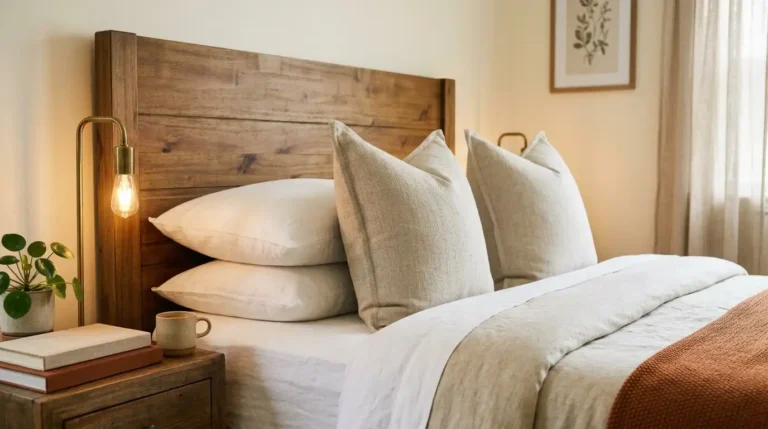
A bare duvet on a mattress with two flat pillows looks unfinished. It does not matter how expensive the bedding is. Without layers, the bed just sits there looking flat and cold. Layers are what make a bed look like a place you actually want to climb into.
At minimum, add a top sheet, a quilt or throw folded at the foot, and two accent pillows in front of your sleeping pillows. You do not need ten pillows. You need three layers of texture: the base bedding, a folded layer at the foot, and a couple of pillows with a different fabric than the duvet. Linen next to cotton, or a chunky knit next to a smooth weave, gives the bed depth without looking overdone.
16. Treating Walls as Permanent and Doing Nothing

“I can’t do anything because it’s a rental” is the most common excuse, and it is almost never true. Most leases allow small nail holes, and even the strictest ones still permit adhesive hooks, removable wallpaper strips, washi tape borders, and leaning art against the wall on a shelf.
Start with peel-and-stick removable wallpaper on one accent wall, or hang a gallery wall using Command strips. Lean a large framed print against the wall on a narrow shelf for a no-holes look. Renters have more options now than they ever have, and bare white walls are a choice, not a limitation.
Renter-Friendly Wall Decor Checklist
Wrapping Up
Most bedroom decorating mistakes renters make come down to rushing, skipping the cheap details, or assuming a rental means you cannot do anything at all. None of the fixes on this list cost more than a weekend afternoon and a modest trip to the store.
Start with the one or two mistakes that hit closest to home, fix those first, and build from there. A bedroom that feels good to walk into at the end of the day is worth every small adjustment.
Save this list for the next time you are setting up a new place or just ready to finally finish the one you are in.