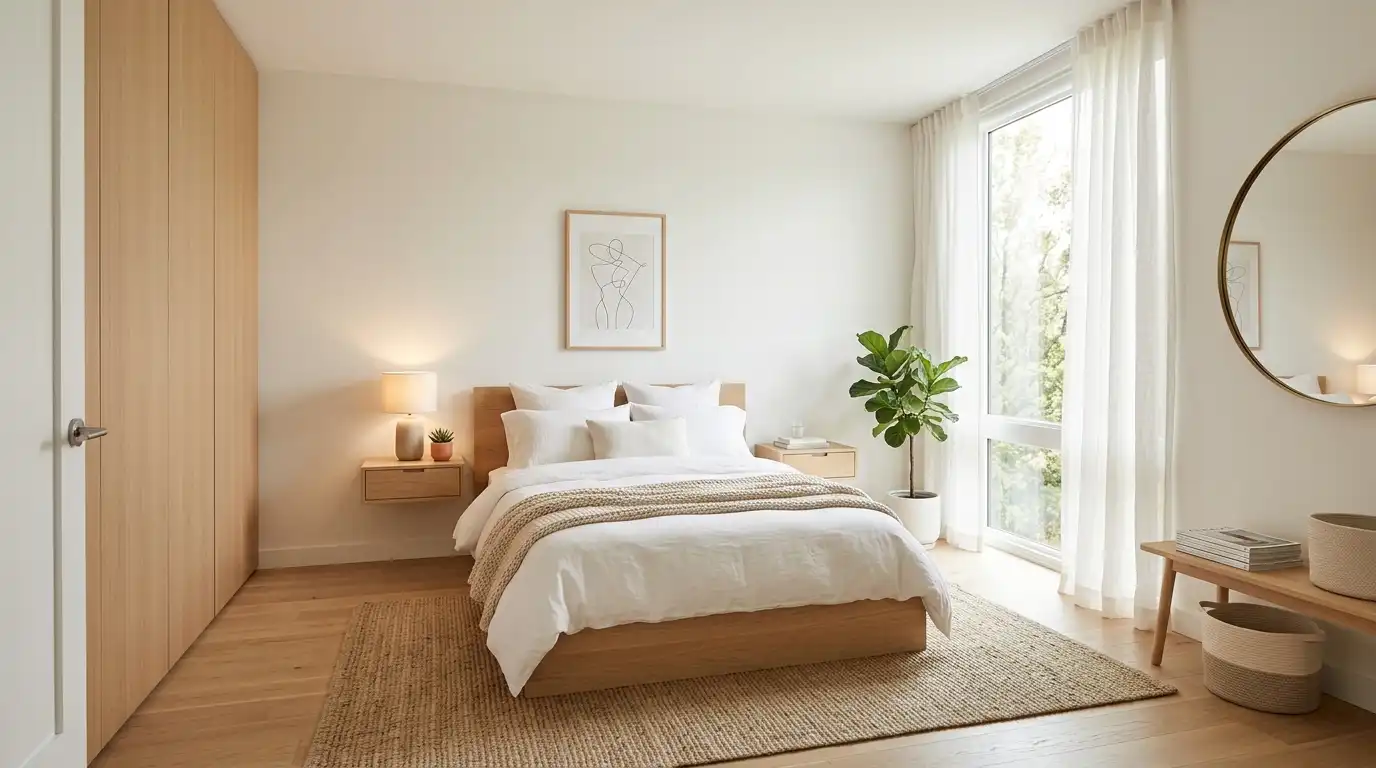
19 Small Bedroom Ideas That Actually Make the Room Feel Bigger
Small bedroom ideas don’t have to start with knocking down a wall. Most of us are working with bedrooms that barely fit a queen bed and a nightstand, and the standard advice to “just declutter” only gets you so far when the room itself is 10 by 11 feet.
The real trick is training your eye to see the room differently. The right mirror placement, a bed frame with hidden storage, curtains hung at ceiling height, these moves cost less than a new dresser and do more for your square footage than any organizer bin ever will.
Here are 19 specific ways to push the walls back without picking up a sledgehammer.
1. Floor-Length Curtains Hung at the Ceiling Line
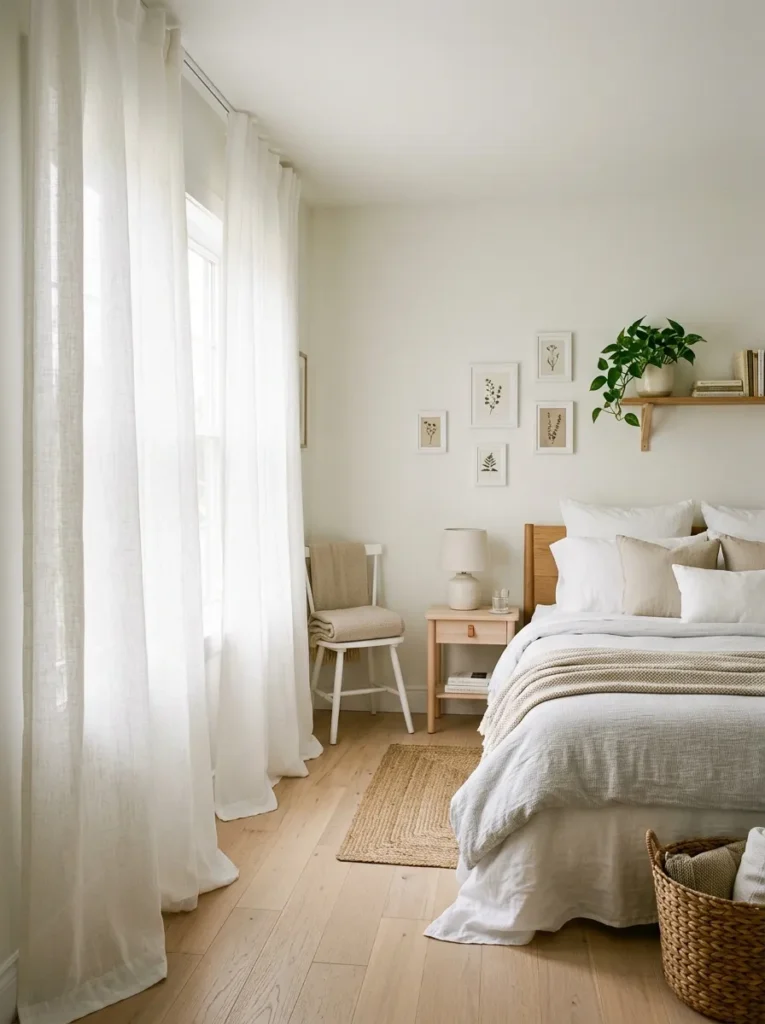
Most people hang curtains right above the window frame. That chops the wall in half visually and makes an 8-foot ceiling feel even lower.
Mount your curtain rod as close to the ceiling as you can, and let the fabric fall all the way to the floor. The unbroken vertical line pulls your eye up and tricks your brain into reading the wall as taller. Use a light, solid fabric like linen or cotton blend in white or soft ivory. Skip heavy patterns here.
Curtain rod mounted 2 inches above the window frame. Short panels ending at the sill. Wall looks chopped in half.
Rod mounted at ceiling height. Floor-length linen panels in soft white. Ceiling looks a full foot taller.
2. A Large Round Mirror on the Wall Opposite the Window
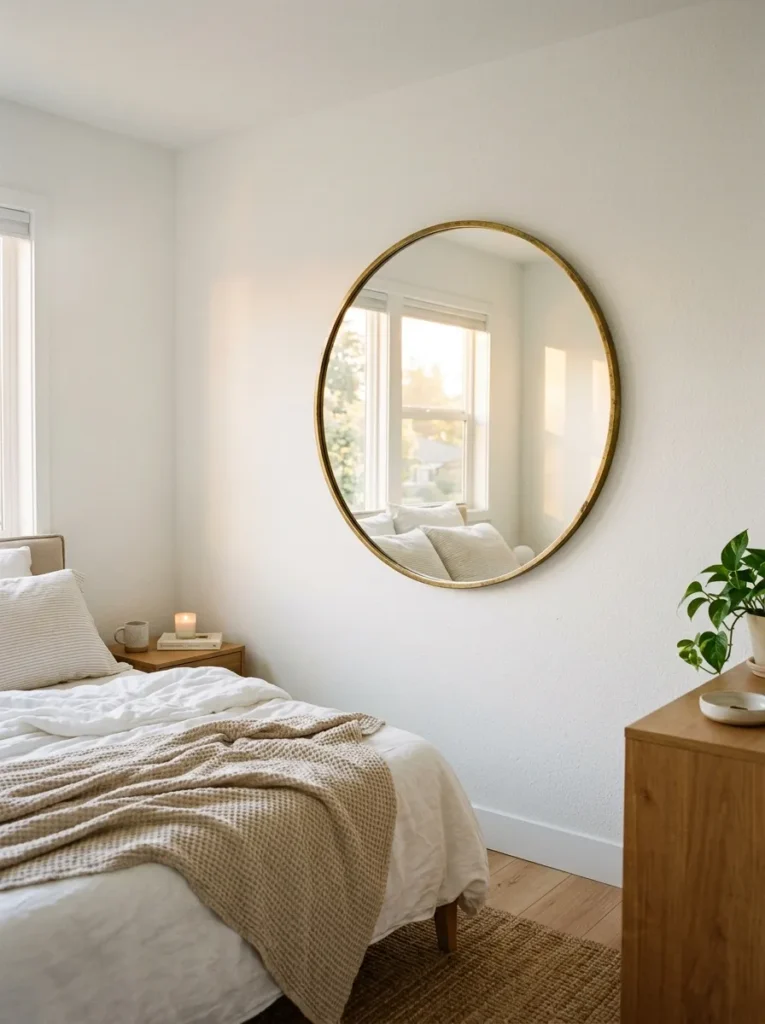
A small mirror over the dresser does almost nothing for the room. A large round mirror, 28 inches or bigger, placed directly across from your main window bounces daylight deep into the space. The reflection doubles the visual depth.
Round mirrors work better than rectangular ones in small rooms because they soften the boxy feel. I’ve tested this in a narrow bedroom that gets about two hours of direct sun, and the difference in afternoon brightness was noticeable from the hallway.
📐 Size Guide
For rooms under 120 sq ft, go with a 28 to 32 inch round mirror. For rooms 120 to 180 sq ft, a 36 inch mirror fills the wall without overwhelming it. Place the center at standing eye level, about 57 to 60 inches from the floor.
3. Bed Frame with Built-In Drawers
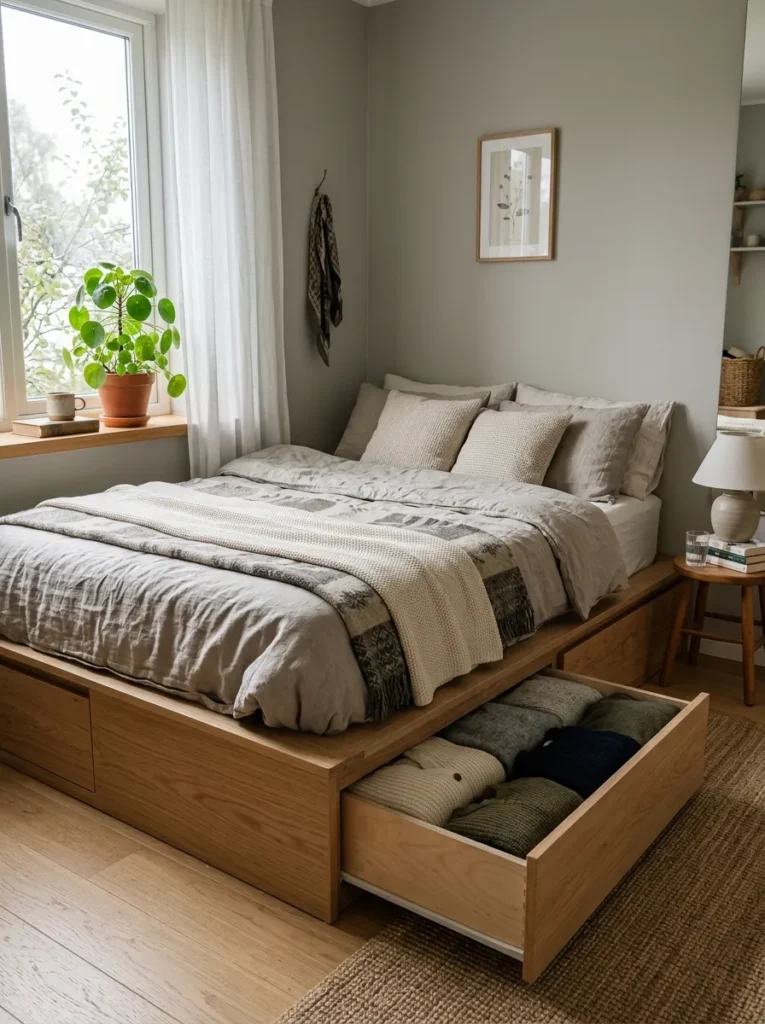
That dresser eating up your wall space might not need to be there at all. A platform bed with two or three built-in drawers on each side holds the same amount of folded clothes, and it sits in space your bed was already using.
Look for frames where the drawers pull out from the side rather than the foot. Foot-end drawers need clearance you might not have. Solid wood runners last longer than plastic gliders, especially if you’re storing heavier items like jeans and sweaters.
Choose side-pull drawers for tight floor plans.
Measure the full extended drawer depth before buying.
Foot-end drawers in rooms with less than 2 feet of clearance.
Cheap plastic glide rails that warp under weight.
4. One Accent Wall in a Deep, Moody Color
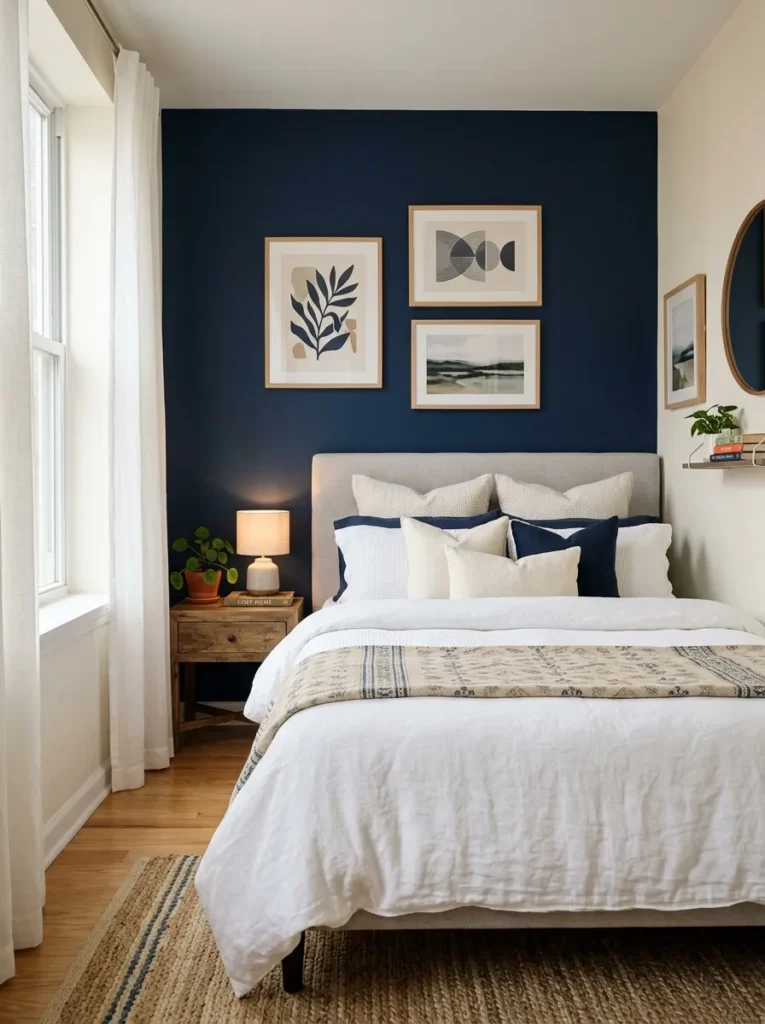
This sounds backward, but painting one wall a rich, saturated color actually pushes that wall further away visually. Deep navy, forest green, or charcoal behind the headboard creates depth that pale walls on all four sides cannot.
Keep the other three walls white or very light. The contrast is what creates the illusion. If you’re renting and can’t paint, peel-and-stick wallpaper in a dark solid tone works the same way. Pull it off when you move out with no damage.
5. Floating Nightstands Instead of Bulky Tables
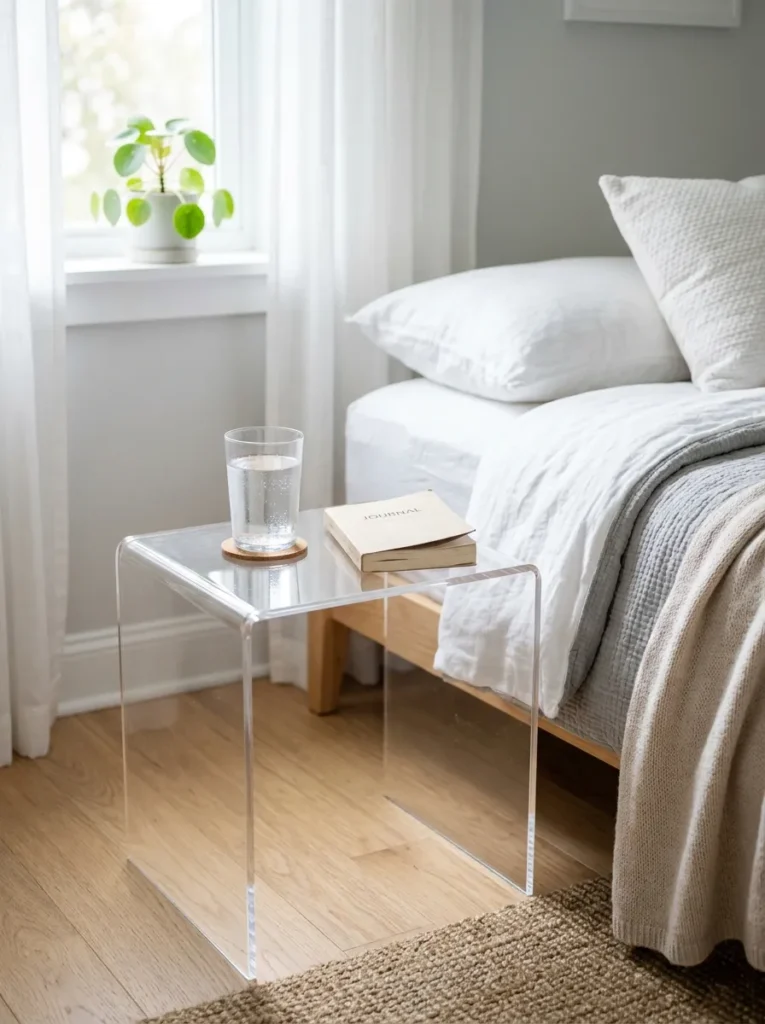
Traditional nightstands with legs and drawers take up visible floor space. When you can see the floor under your furniture, the room reads as bigger.
Wall-mounted floating shelves used as nightstands keep the surface you need for a lamp and phone, while freeing up every inch below. Install them at mattress height, about 24 to 26 inches wide. A single shelf with a small lip works better than a box-style floating unit, which tends to look heavy on a small wall.
💡 Quick Tip
Install your floating nightstand so the top surface sits level with the top of your mattress, or just one inch below. This keeps your phone, water glass, and lamp within easy reach without awkward stretching.
6. White or Light Bedding with Layered Texture
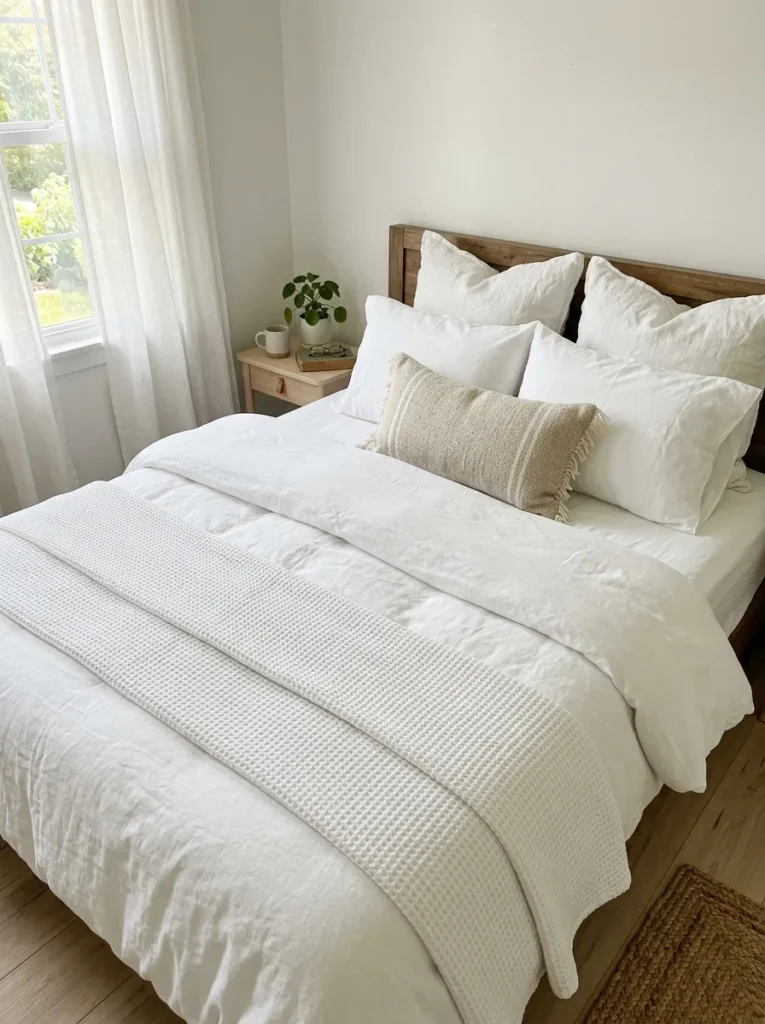
Dark, patterned comforters visually shrink a bed. In a room where the bed takes up 60% of the floor, that matters.
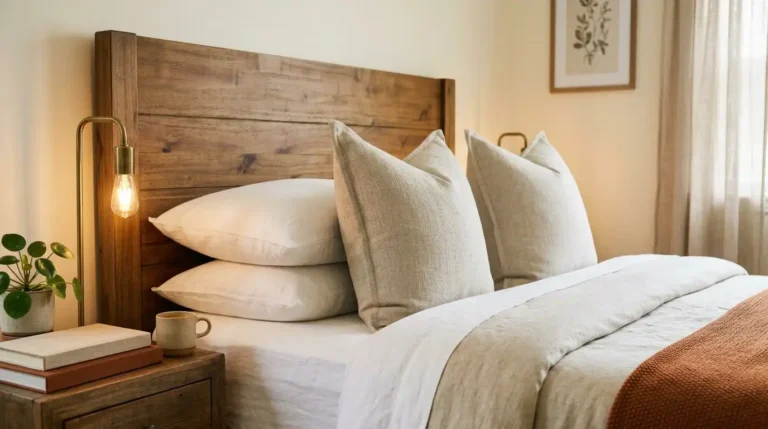
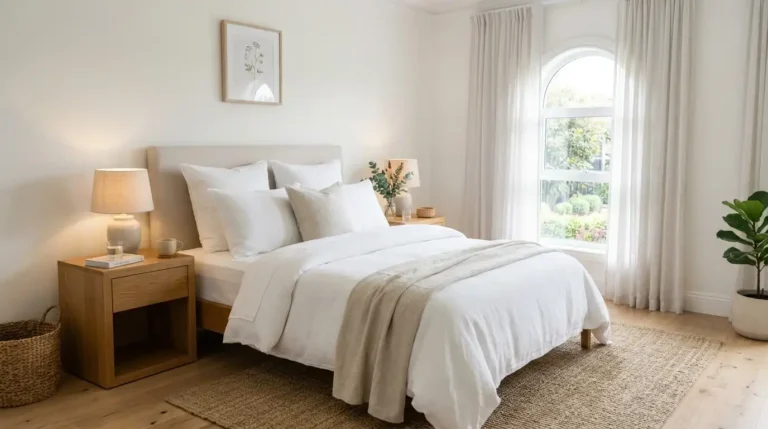
Switch to a white or off-white duvet cover and build interest through texture instead of color. Layer a waffle-knit blanket at the foot, add a linen euro sham behind your sleeping pillows, toss on one textured lumbar pillow. The all-light palette reflects more light around the room, and the texture layers keep it from looking like a hotel supply closet.
Start with a white or ivory duvet cover as your base layer.
Fold a waffle-knit or chunky throw across the lower third of the bed.
Add one textured lumbar pillow in a natural tone like oatmeal or sand.
7. Vertical Bookshelves That Reach the Ceiling
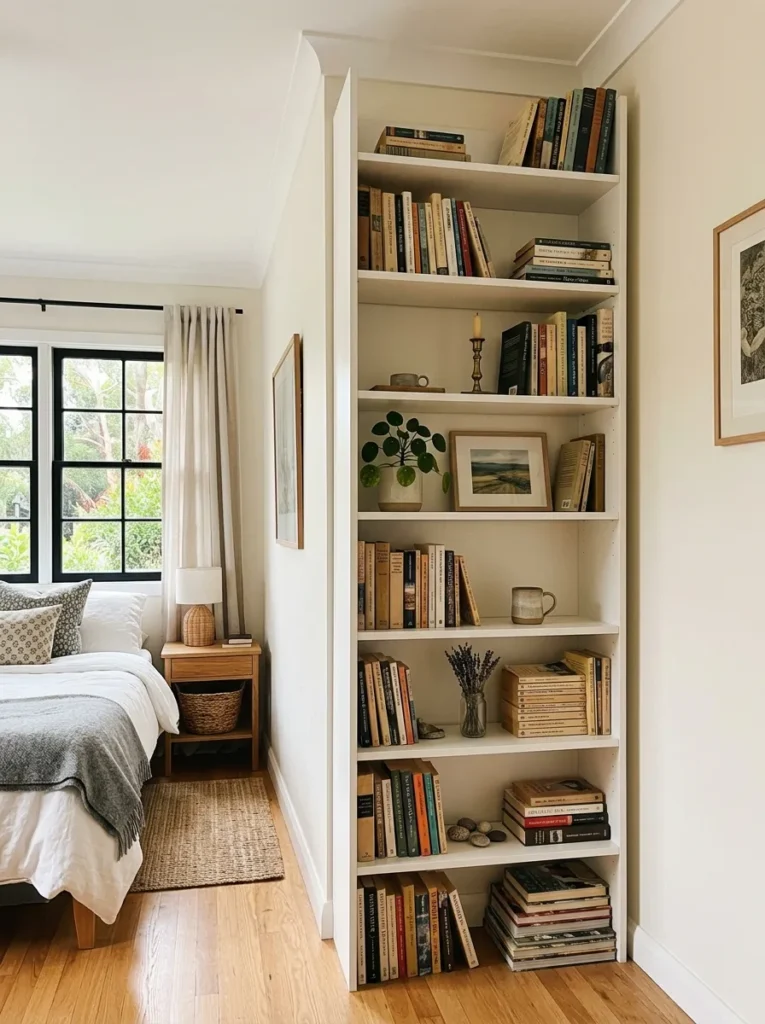
Short, wide bookcases waste vertical real estate and add clutter at eye level. A tall, narrow bookshelf that stretches from floor to near-ceiling stores more while drawing the eye upward.
Go 12 inches deep or less so it doesn’t jut into walking paths. In my experience, an 80-inch tall shelf in a 96-inch ceiling room looks intentional and grand, while a 48-inch shelf just looks like you ran out of budget. Paint it the same color as the wall behind it to make it disappear even more.
| Short Wide Shelf | Tall Narrow Shelf |
|---|---|
| Uses 3 to 4 ft of wall width | Uses 1.5 to 2 ft of wall width |
| Stops at waist height, dead space above | Reaches near ceiling, pulls the eye up |
| Clutter sits at eye level | Top shelves hold display items, bottom shelves hold daily use |
8. Wall-Mounted Sconces Instead of Table Lamps
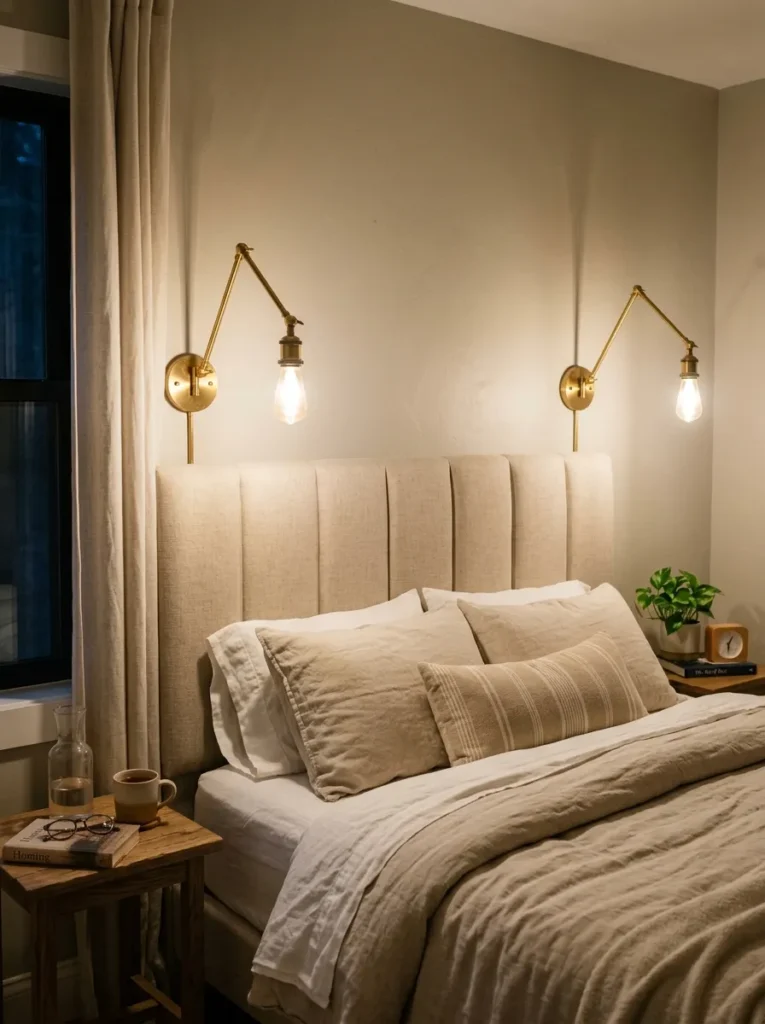
Table lamps claim the best real estate on your nightstand. In a small bedroom, that 6-inch lamp base means your phone ends up on the floor or balanced on a stack of books.
Swing-arm wall sconces give you the same directed reading light while freeing the entire nightstand surface. Hardwired versions look cleanest, but plug-in sconces with a fabric-covered cord are renter-friendly and take about 15 minutes to install. Position them 4 to 6 inches above your headboard on each side.
9. A Low-Profile Platform Bed Without a Footboard
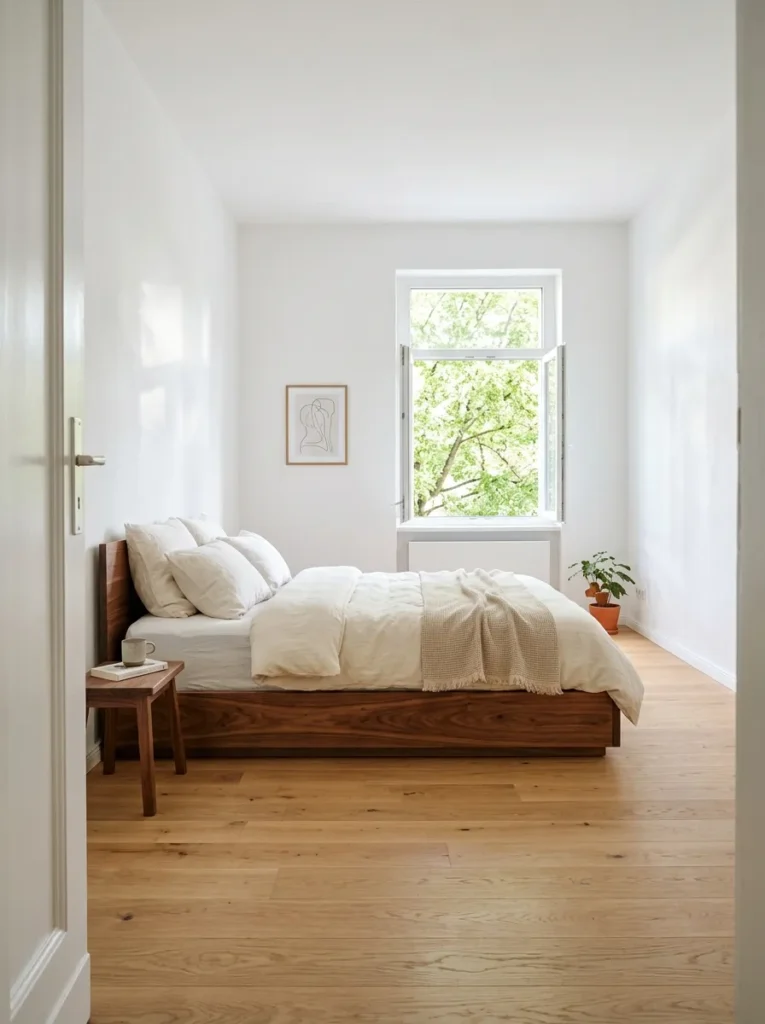
Footboards create a visual wall across the room. In bedrooms where you can barely walk around the bed, losing the footboard opens up sightlines to the floor and the opposite wall.
A low-profile platform frame, around 6 to 10 inches off the ground, keeps the mattress close to the floor without feeling like a mattress-on-the-ground situation. The lower the bed sits, the more ceiling you see above it. That ratio of open space to furniture is what makes the room breathe.
The more floor and ceiling your eye can see past the bed, the bigger the room feels. A low frame without a footboard maximizes both.
10. Matching Wall and Trim Paint Color
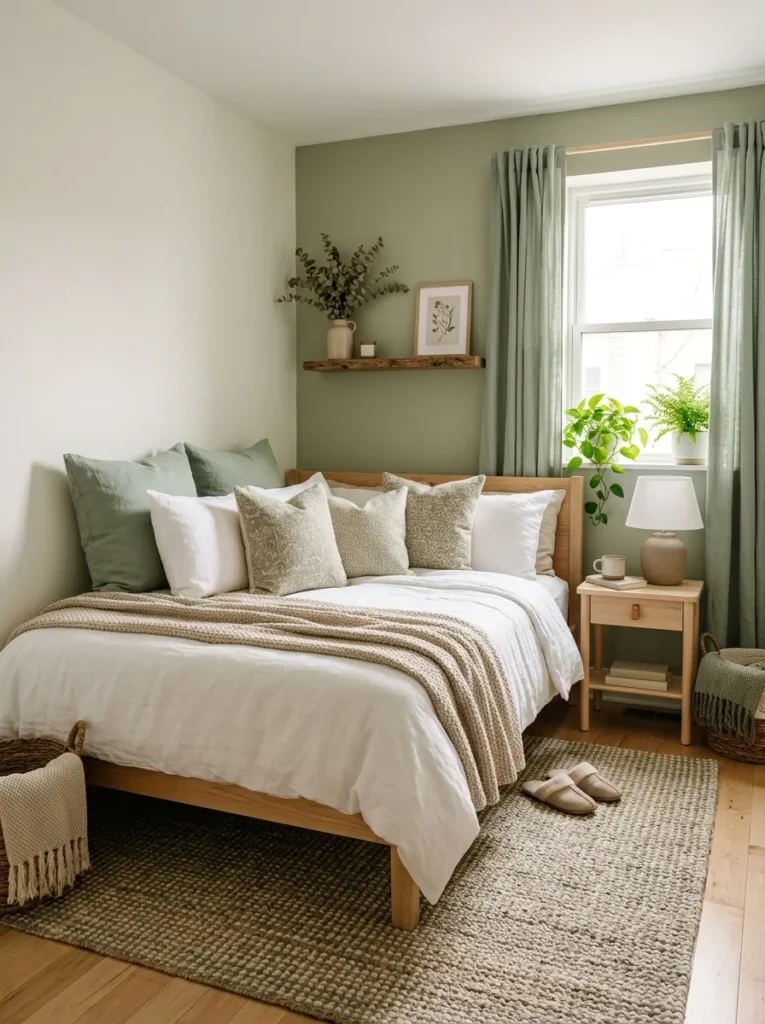
When trim, molding, and walls are different colors, your eye reads each change as a boundary. More boundaries mean more visual breaks, and more visual breaks mean the room feels chopped up.
Paint the walls, baseboards, crown molding, and door frame the same color. A soft warm white works best. The room will feel wrapped rather than sectioned. This trick works particularly well in bedrooms with lots of architectural detail like thick baseboards or window casings that would otherwise create a busy grid.
📌 Good To Know
Use the same color but different sheens: eggshell or matte on walls, semi-gloss on trim. You get the seamless look while keeping the trim easy to wipe clean.
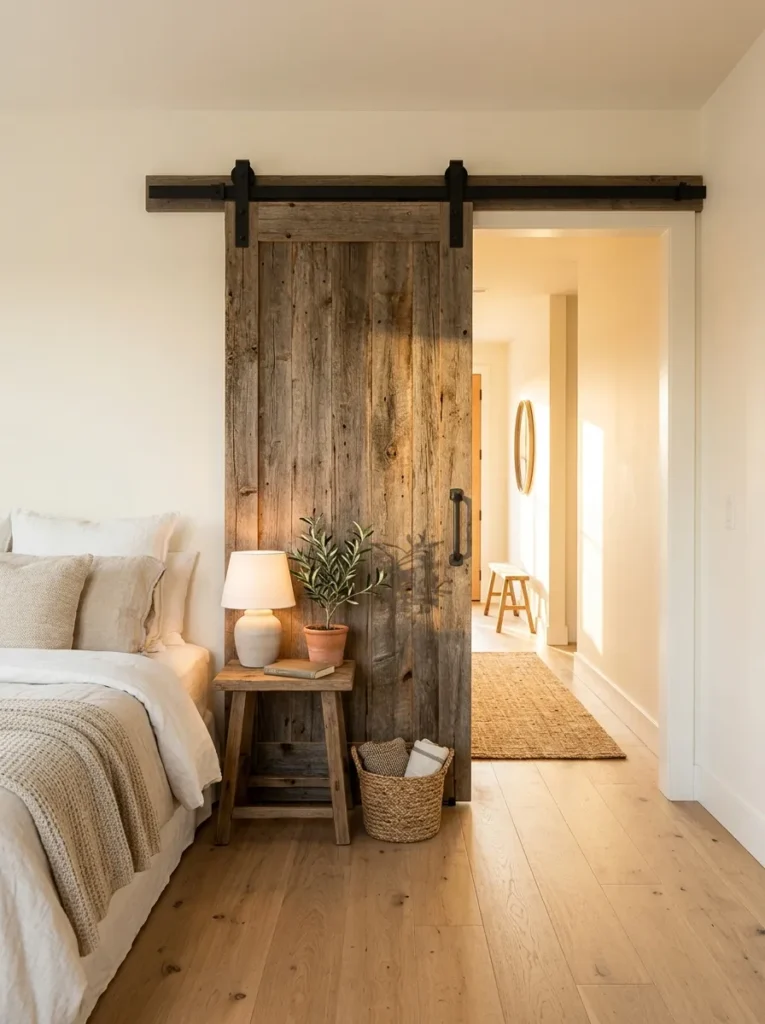
11. Sliding Barn Door or Pocket Door

A standard hinged door needs about 8 square feet of clearance to swing open. In a bedroom that’s already tight, those 8 square feet are prime real estate you’re handing over to empty swing space.
A sliding barn door on a wall-mounted rail eliminates that dead zone completely. If you’re renovating, a pocket door that slides into the wall is even cleaner. For renters, barn door hardware kits mount with screws into the header and can be patched when you move. The floor space you recover is enough for a small reading chair or a narrow clothing rack.
Requires ~8 sq ft of swing clearance. Blocks furniture placement behind the door path. Limits layout options.
Zero swing clearance needed. Full floor space stays usable. Opens up room for a chair, rack, or shelf in the recovered area.
12. Leaning Full-Length Mirror Against the Wall
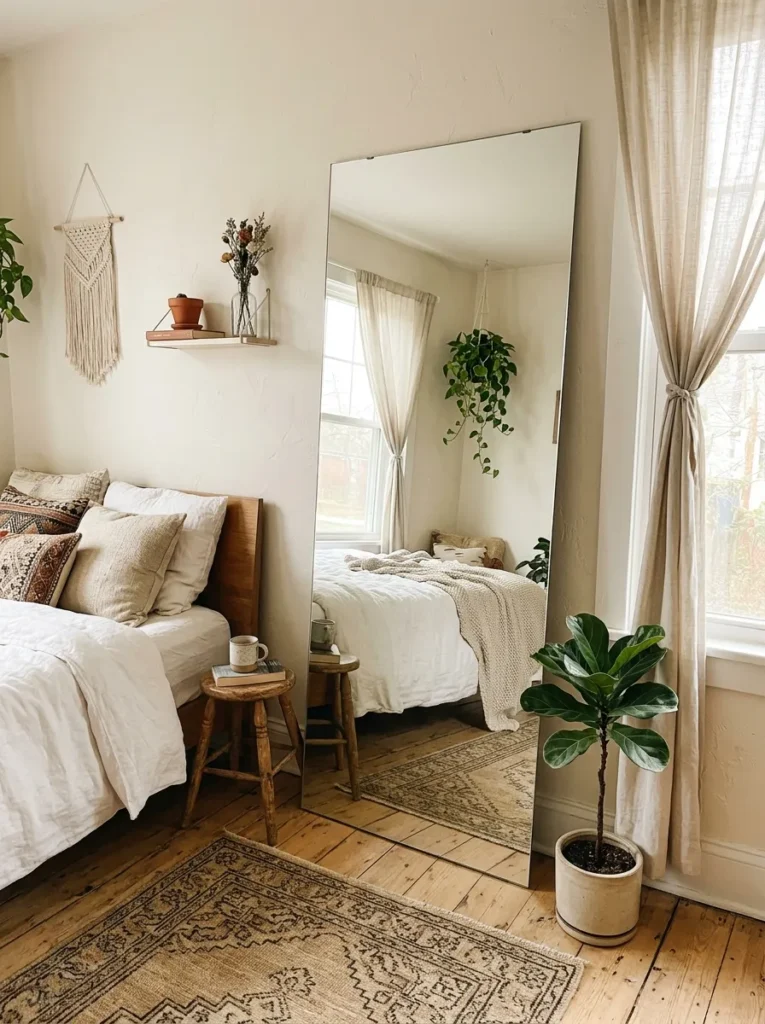
A tall mirror leaned casually against the wall near a corner does two things. It reflects the longest diagonal of the room, which makes the space feel deeper. And it acts like a second window, bouncing light from across the room into the dark corner.
Lean it, don’t hang it. A leaned mirror reads as an intentional design piece rather than a bathroom fixture. Place it where it catches the most natural light. Stay away from positioning it directly facing the bed if that bothers you at night.
🪞 Placement Checklist
13. Furniture with Exposed Legs
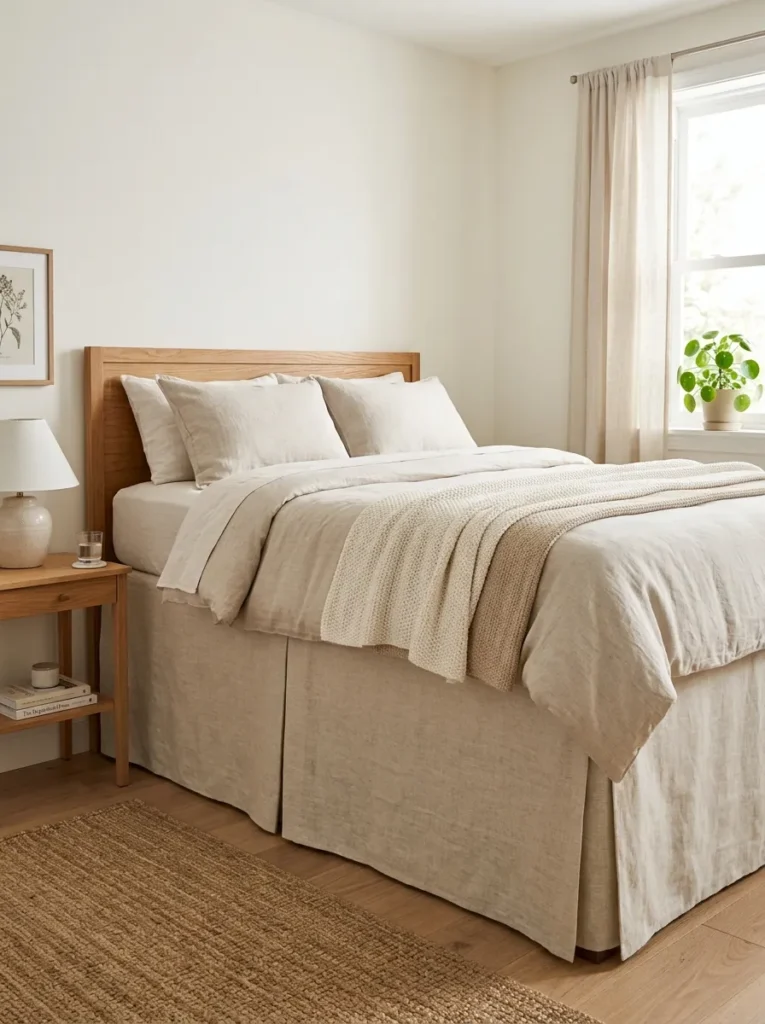
Furniture that sits flat on the floor blocks your view of the ground beneath it. Your brain reads that hidden floor as lost space.
Swap blocky, skirted furniture for pieces with visible legs, 4 to 6 inches off the ground. A bed frame on tapered legs, a dresser on hairpin legs, a bench with slender wooden feet. When you can see floor underneath every piece, the room suddenly has a continuous ground plane instead of a patchwork of blocked sections. This one change can make a room feel wider without moving a single thing.
Visible floor = perceived space. Every piece of furniture that shows its legs adds to the visual square footage of the room.
14. One Large Art Piece Instead of a Gallery Wall
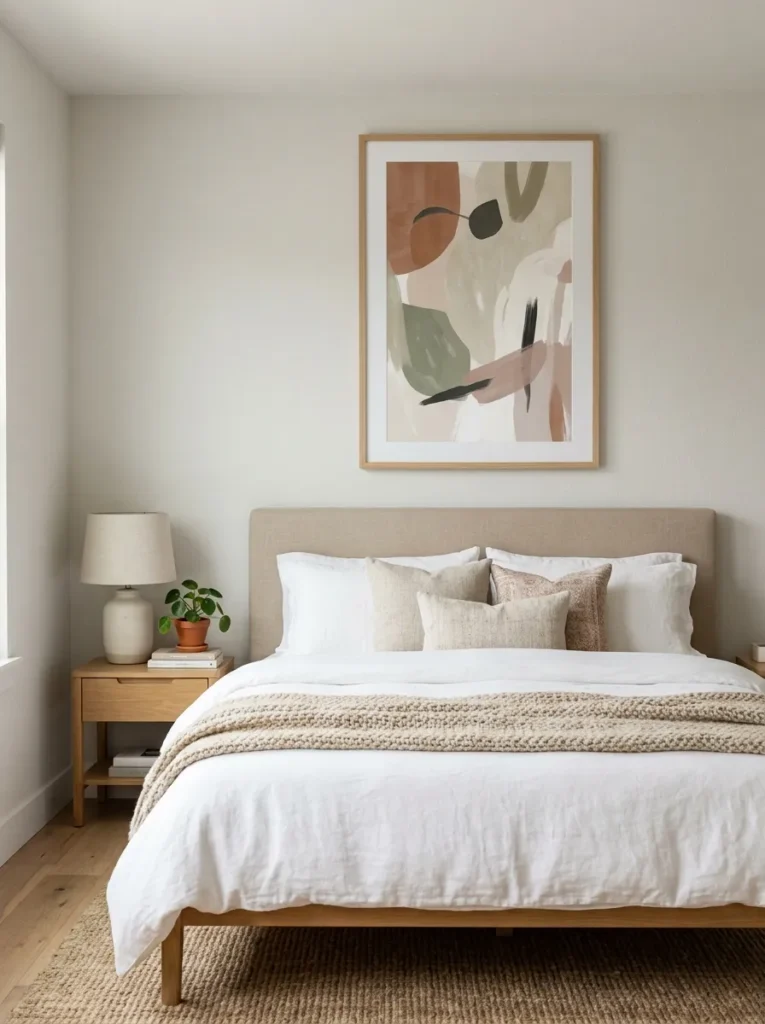
Gallery walls look wonderful in big rooms. In a small bedroom, ten mismatched frames create visual noise that makes the walls feel cluttered and closer.
Pick one large-format piece, 24 by 36 inches or bigger, and center it above the headboard or on the wall you see first when you walk in. A single focal point gives the eye a place to land and rest, which is the opposite of what a busy grid of frames does. Keep the subject calm: an abstract, a landscape, or a soft photograph. This is one upgrade I’ve seen work in every small room I’ve helped style.
One large piece, centered, with breathing room around it.
Calm subjects: abstracts, landscapes, muted tones.
A grid of 8 to 12 small frames crowding the wall.
Busy patterns or high-contrast prints that pull focus everywhere.
15. Lucite or Glass Bedside Furniture
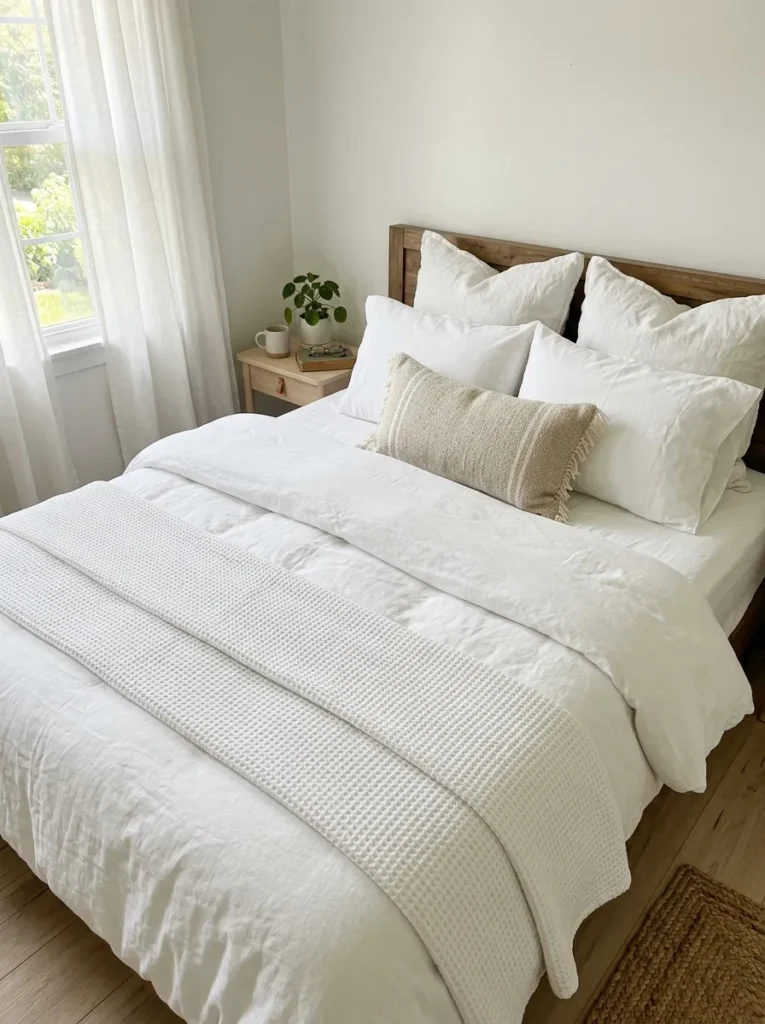
Clear materials take up physical space without taking up visual space. A lucite side table or a small glass-top stool next to the bed holds your essentials while letting you see right through to the wall and floor behind it.
This works especially well in rooms where you need a nightstand on both sides but the bed barely fits. Glass and acrylic also catch and scatter light, which adds to the airy feel. One downside: fingerprints show easily, so keep a microfiber cloth in the drawer.
⚠️ Watch Out
Lucite and glass furniture shows every fingerprint and dust particle. If you dislike constant wiping, choose a frosted or textured acrylic instead of fully clear. It hides marks better while still looking lightweight.
16. Over-the-Door Organizer for Accessories
The back of your bedroom door is a wall you’re not using. An over-the-door organizer with fabric or clear pockets can hold scarves, belts, hats, sunglasses, and jewelry that would otherwise pile up on the dresser or clutter a drawer.
Choose one with slim pockets rather than bulky pouches so the door still closes flush. Clear pockets let you see everything at a glance, which means you’ll actually use what’s in there. This frees up dresser space for folded clothes, which means you might not need that second dresser at all.
17. Recessed or Flush-Mount Ceiling Light
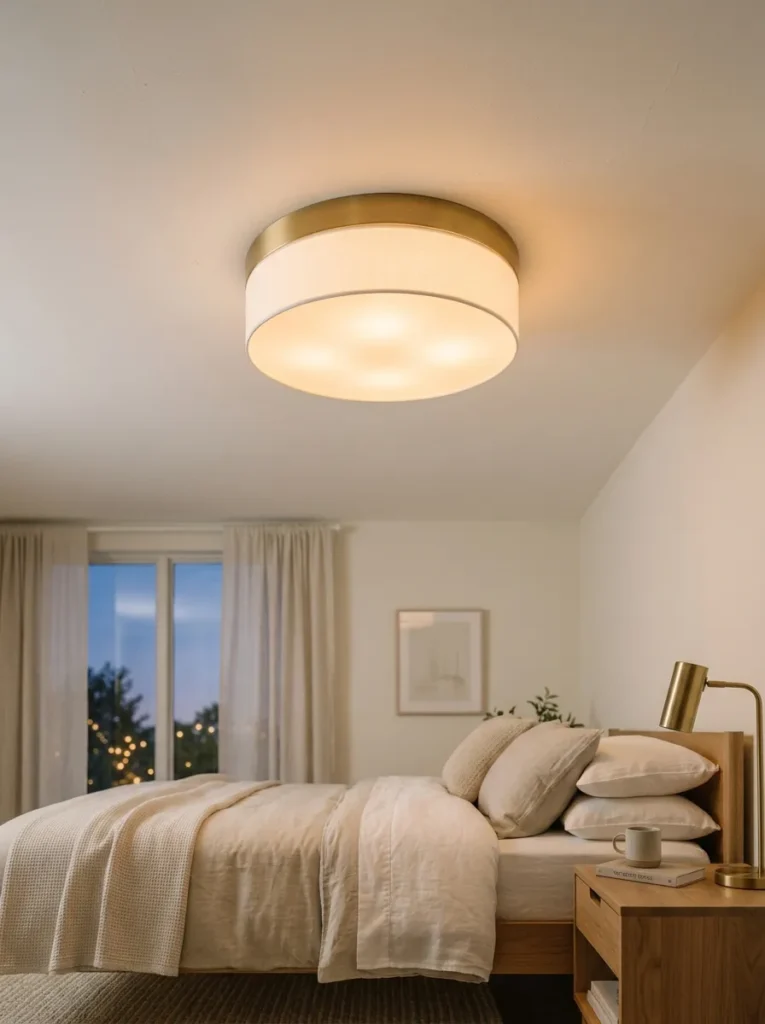
Hanging pendant lights and chandeliers eat into your headroom. In a room with 8-foot ceilings, a pendant that drops 12 inches means you’ve lost a foot of perceived height across the entire room.
A flush-mount or slim LED panel sits tight against the ceiling, giving back that visual height. Pick something warm-toned, around 2700K to 3000K, so the room still feels cozy. Avoid the flat, round, builder-grade flush mounts from the hardware store. There are slim drum-style and geometric options now that look intentional without hanging low.
| Hanging Pendant | Flush-Mount Light |
|---|---|
| Drops 10 to 18 inches from ceiling | Sits within 3 inches of ceiling |
| Creates a visual weight at center of room | Ceiling stays clean and open |
| Best for 9 ft+ ceilings | Ideal for standard 8 ft ceilings |
18. Under-Bed Risers with Fabric Skirt
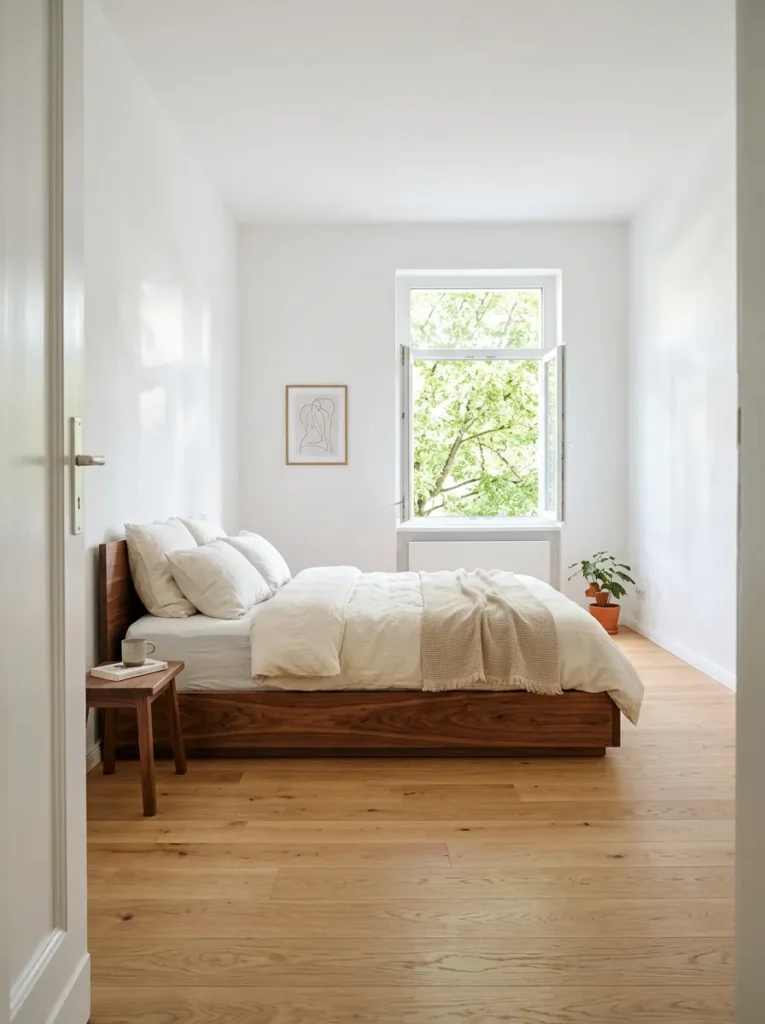
If your bed doesn’t have built-in storage and you can’t replace the frame, risers are the budget fix. A set of 4 to 6 inch risers lifts your bed frame high enough to slide bins and baskets underneath.
The trick to keeping this from looking like a college dorm: add a tailored bed skirt or a simple fabric panel pinned to the box spring. It hides the bins while maintaining the clean line of the bed. Use shallow, labeled bins so you actually retrieve things instead of shoving them into the void and forgetting about them.
Place risers under all four legs and confirm the bed is level.
Slide labeled, shallow bins underneath, organized by category.
Attach a tailored bed skirt or pinned fabric panel to hide everything neatly.
19. A Consistent Color Palette of Three or Fewer Colors
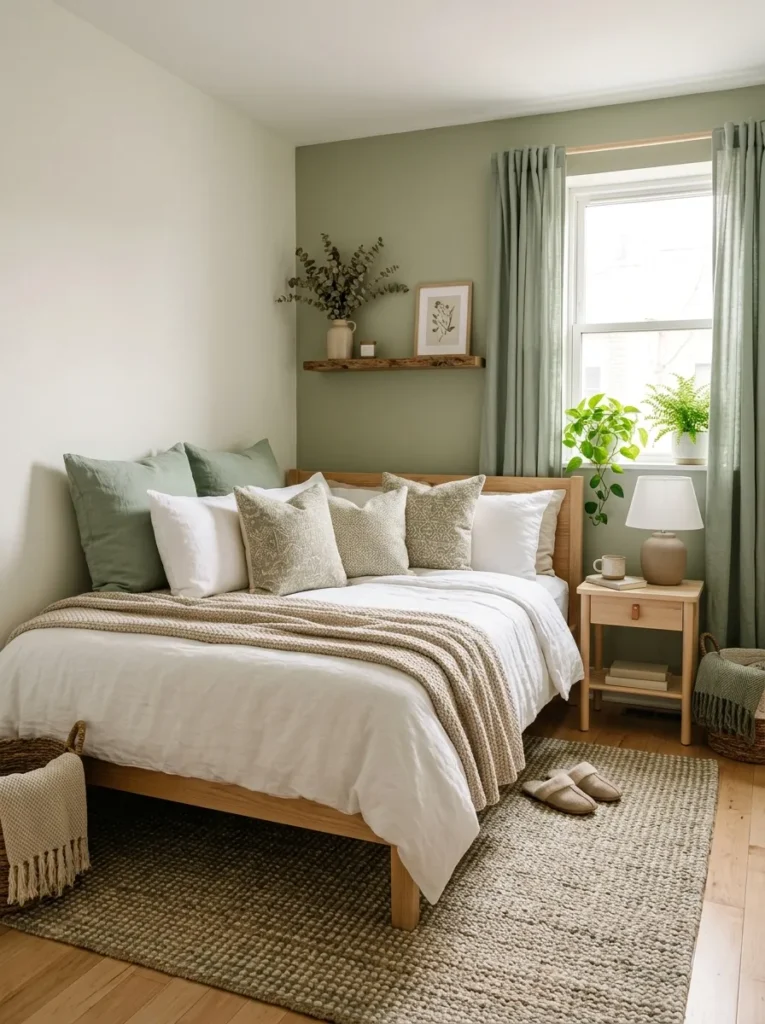
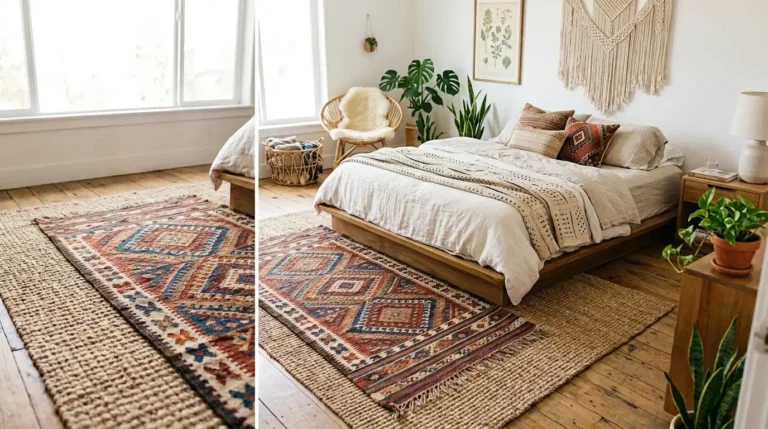
The fastest way to make a small room feel chaotic is to fill it with too many colors. A red throw pillow here, a teal lamp there, a patterned rug pulling in five different shades. Every new color breaks the room into smaller visual zones.
Pick two or three colors and stick with them for everything: bedding, rug, curtains, pillows, wall art. One neutral base, one slightly warmer neutral, one soft accent. The room will read as one cohesive space instead of a patchwork. I’ve helped friends strip back to a simple palette and the reaction is always the same: “why does this room look bigger?” It’s the color continuity doing the work.
Final Thoughts
You don’t need a bigger room. You need a room that works smarter with the space it already has. Most of these small bedroom ideas cost under $100, some cost nothing at all, and none of them require a contractor.
Start with one or two changes that speak to your biggest frustration, whether that’s a dark corner, not enough storage, or a ceiling that feels like it’s closing in. Stack the wins from there.
Save this list for the next time you’re staring at your bedroom thinking “something has to change.” The answer is usually simpler than you think.